
 By
By 
In the rapidly evolving landscape of digital finance, the unseen yet critical components-APIs and oracles-serve as the backbone of institutional blockchain applications. These technologies enable seamless integration, real-time data access, and compliance, addressing market skepticism and fostering investor confidence.
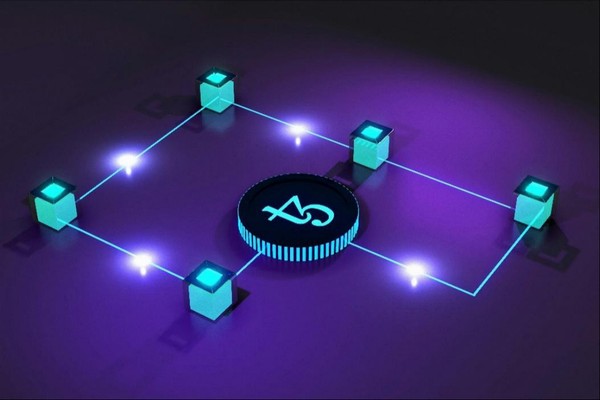
Filename: connected-blockchain-cubes
Alt Text: 3D-rendered cubes connected by lines symbolizing blockchain network infrastructure
Caption: APIs and oracles form the invisible layer connecting institutional systems to smart contracts with precision and compliance.
Understanding APIs and Oracles in Blockchain
Application Programming Interfaces (APIs) serve as critical tools that enable seamless communication and data exchange between distinct software systems. Within the blockchain ecosystem, APIs allow institutional systems-such as trading platforms, risk management dashboards, and compliance tools-to efficiently interact with decentralized networks. By standardizing how requests for data and services are made, APIs reduce friction between legacy financial systems and emerging blockchain protocols, ensuring reliable performance and scalable integration. This is particularly important for institutions that require high throughput, security, and real-time access to digital asset data.
Oracles, on the other hand, are specialized services that connect blockchain-based smart contracts to off-chain data sources. Since blockchains are inherently closed systems and cannot directly access external information, oracles function as trusted intermediaries that fetch, verify, and relay critical off-chain data-such as price feeds, interest rates, weather conditions, identity credentials, or even legal documents-back to the blockchain. This functionality is essential for executing automated contracts in a way that reflects real-world events and market conditions.
When combined, APIs and oracles form the invisible infrastructure layer that powers a wide range of institutional blockchain use cases. They enable complex financial operations such as algorithmic trading, cross-border payments, real-time settlement, automated compliance checks, and decentralized insurance-all of which require timely, accurate, and interoperable data. For institutional players exploring blockchain, these components are not optional-they are foundational to building secure, compliant, and performant investment frameworks on-chain.
Institutional Adoption and Market Growth
The global blockchain technology market was valued at $31.28 billion in 2024 and is projected to grow at a CAGR of 90.1% from 2025 to 2030, reaching $1,431.54 billion by 2030. This exponential growth is driven by the increasing demand for secure and transparent transactions across various industries, notably finance.
A Deloitte survey revealed that 76% of financial executives consider blockchain a strategic priority, up from 54% in 2021. This shift underscores the technology’s transition from a theoretical concept to a practical solution delivering tangible benefits.
Enhancing Compliance and Regulatory Clarity
Regulatory clarity is paramount for institutional adoption. The proposed Digital Trading Clarity Act aims to harmonize digital asset regulation, providing clear guidelines on asset classification and intermediary requirements. Such initiatives reduce legal uncertainties, enabling institutions to engage confidently with blockchain technologies.
Moreover, the Financial Innovation and Technology for the 21st Century (FIT21) Act, approved by the U.S. House of Representatives, seeks to provide comprehensive regulatory frameworks for digital assets, further solidifying the foundation for institutional participation.
Political Support and Industry Collaboration
Political backing plays a crucial role in the advancement of blockchain technologies. The Congressional Blockchain Caucus, comprising bipartisan members, advocates for policies that support blockchain innovation and integration. Such support facilitates the development of infrastructure necessary for institutional use cases.
Industry collaborations, like the Canton Network, exemplify the collective efforts of financial institutions and technology firms to create interoperable and privacy-preserving blockchain networks tailored for institutional needs.
Filename: decentralized-data-network-visual
Alt Text: Digital visualization of interconnected cubes and a central hub representing a decentralized data oracle system
Caption: Discover how modular APIs and oracles are transforming backend infrastructure for institutional-grade blockchain performance.
Real-World Applications and Use Cases
APIs and oracles are foundational to the functioning of institutional blockchain applications, providing the data infrastructure necessary for real-time automation, compliance, and cross-platform coordination. These technologies ensure that blockchain networks can operate within the broader digital and regulatory ecosystems that institutions rely on.
Price Feeds: In decentralized finance (DeFi), accurate and timely market data is essential for operations such as lending, borrowing, synthetic asset creation, and derivatives settlement. Oracles deliver real-time pricing information from centralized exchanges, decentralized platforms, and institutional sources directly to on-chain smart contracts. This allows platforms to trigger precise contract conditions, such as liquidations or interest rate adjustments, based on verifiable market metrics. Without reliable oracles, smart contracts would operate in isolation-unable to reflect real-world conditions and thus prone to malfunction or manipulation.
Regulatory Compliance: APIs are essential for enabling real-time communication between blockchain protocols and institutional compliance systems. For example, APIs can transmit transaction data to anti-money laundering (AML) software, integrate with know-your-customer (KYC) verification systems, or report relevant activities to regulatory agencies automatically. This ensures that institutions using blockchain technology can adhere to jurisdiction-specific legal frameworks while maintaining auditability and transparency in their operations. Such integrations are vital for institutional adoption, where legal and reputational risk management is non-negotiable.
Data Interoperability: APIs and oracles also support the exchange of data between blockchain platforms and traditional financial infrastructure. This interoperability enables asset managers, custodians, and fund administrators to bridge on-chain and off-chain environments-for example, by syncing smart contract activity with legacy reporting tools, accounting systems, or risk analysis platforms. As institutions increasingly explore modular blockchain architectures and multi-chain investment strategies, the ability to fluidly share and standardize data becomes a strategic necessity.
A prime example of this architecture in action is Chainlink (LINK), a decentralized oracle network designed to securely connect blockchains with external data and traditional APIs. Chainlink’s oracles can deliver not only price feeds but also weather data for parametric insurance, sports scores for prediction markets, and even proof-of-reserve data for stablecoins. Furthermore, Chainlink’s CCIP (Cross-Chain Interoperability Protocol) expands its capabilities to facilitate value transfer and messaging across different blockchain networks-a key requirement for composable finance and tokenized asset platforms.
The adoption of Chainlink by prominent DeFi protocols, NFT platforms, and institutional-grade platforms like SWIFT’s blockchain experiments, illustrates just how central oracles have become to enterprise-grade blockchain deployments. In short, APIs and oracles are not just middleware-they are the connective tissue between decentralized systems and the institutional world, enabling secure, compliant, and data-rich digital asset ecosystems.
Addressing Market Skepticism
Despite the promising advancements, skepticism persists regarding the reliability and security of blockchain technologies. However, the integration of robust APIs and decentralized oracles mitigates these concerns by ensuring data accuracy and system interoperability.
Furthermore, the involvement of reputable digital asset strategy consulting firms and blockchain asset investments consultants provides institutions with expert guidance, facilitating informed decision-making and strategic implementation.
Conclusion
APIs and oracles constitute the invisible yet indispensable layer powering institutional blockchain use cases. Their ability to bridge on-chain and off-chain environments, ensure compliance, and facilitate data interoperability is crucial for the maturation of the digital asset ecosystem.
As regulatory frameworks solidify and political support strengthens, the role of APIs and oracles will become increasingly central to institutional blockchain adoption. Engaging with experienced digital asset consulting firms and leveraging advanced infrastructure will be key to navigating this evolving landscape.
Explore the Infrastructure Powering Institutional Blockchain Innovation
Kenson Investments encourages organizations to discover how APIs and oracles are driving interoperability, compliance integration, and operational efficiency in blockchain ecosystems. As a global digital asset consulting firm, we focus on delivering educational insights and infrastructure-focused guidance to help institutions understand the backend technologies shaping tomorrow’s digital asset landscape.
Connect with their team to learn more about how modular infrastructure is reshaping institutional use cases across the blockchain economy.
About the Author
An independent contributor specializing in blockchain and digital asset consulting, with extensive experience in institutional portfolio management and DeFi finance consulting services.
Disclaimer: The information provided on this page is for educational and informational purposes only and should not be construed as financial advice. Crypto currency assets involve inherent risks, and past performance is not indicative of future results. Always conduct thorough research and consult with a qualified financial advisor before making investment decisions.
“The crypto currency and digital asset space is an emerging asset class that has not yet been regulated by the SEC and US Federal Government. None of the information provided by Kenson LLC should be considered as financial investment advice. Please consult your Registered Financial Advisor for guidance. Kenson LLC does not offer any products regulated by the SEC including, equities, registered securities, ETFs, stocks, bonds, or equivalents”




Comments